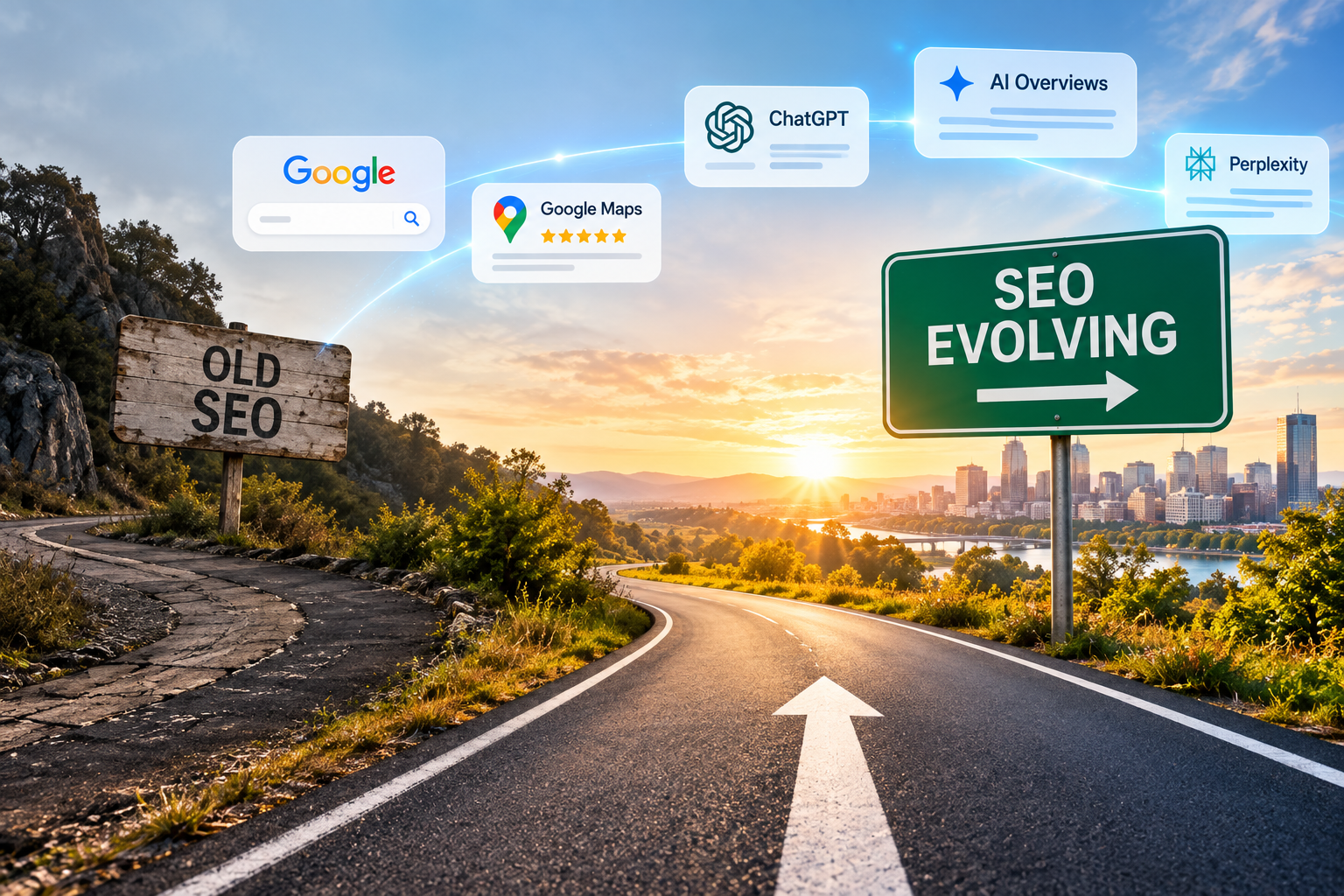

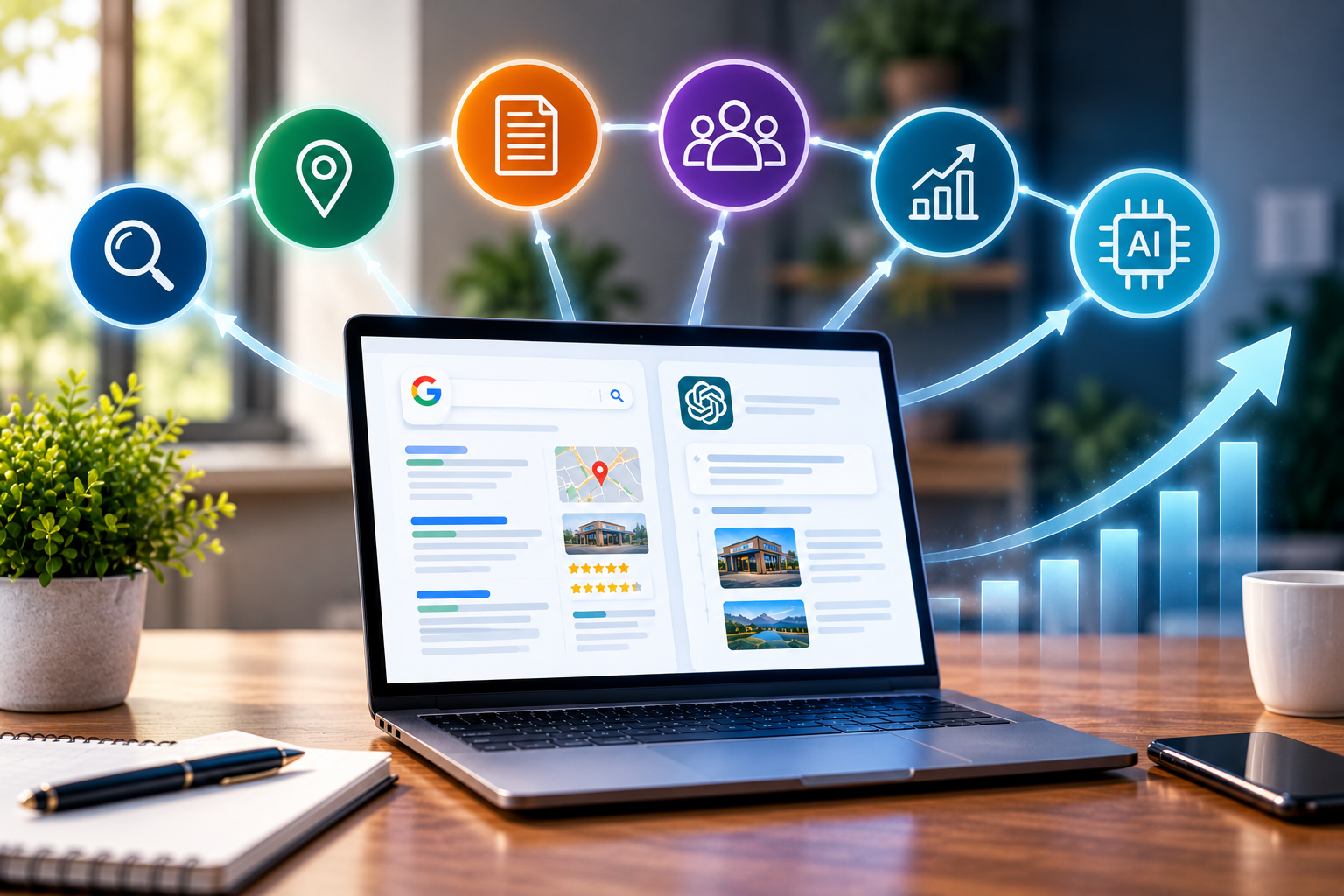
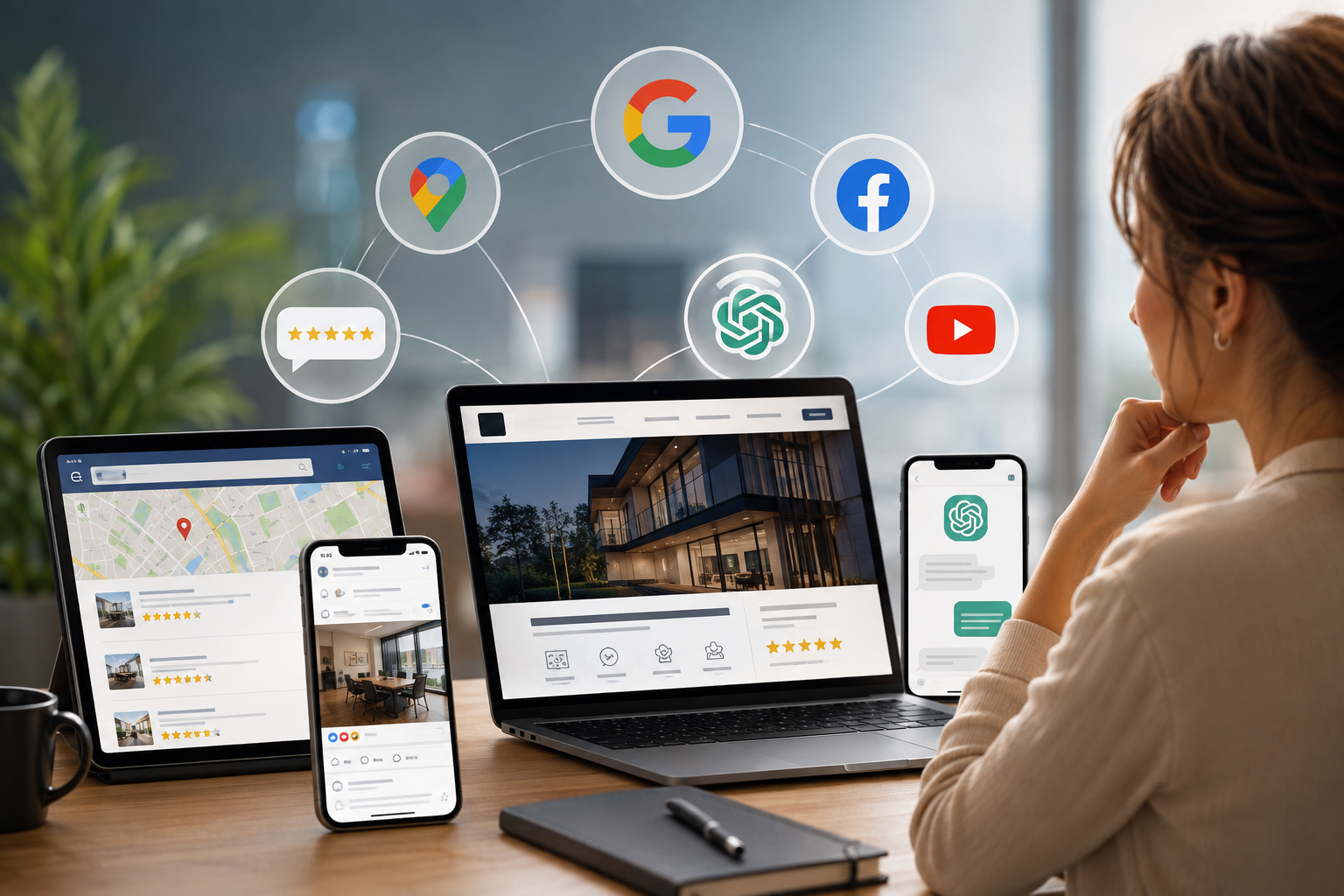
Traditional SEO Isn’t Dead: How SEO Is Evolving With AI Search

Infinite Web Co LLC • September 30, 2026

Every time search technology changes, we're told SEO is dead.


Now, artificial intelligence is the reason.


As AI Overviews, AI Mode, ChatGPT, and other AI-powered tools become part of how people find information, a new message has started appearing throughout the marketing industry: traditional SEO doesn't work anymore, and businesses need to replace it with an entirely new form of "AI SEO."


At Infinite Web Co., that's not what we're seeing.


Traditional SEO is still working. We're still seeing businesses gain visibility, improve rankings, and generate leads through organic and local search.


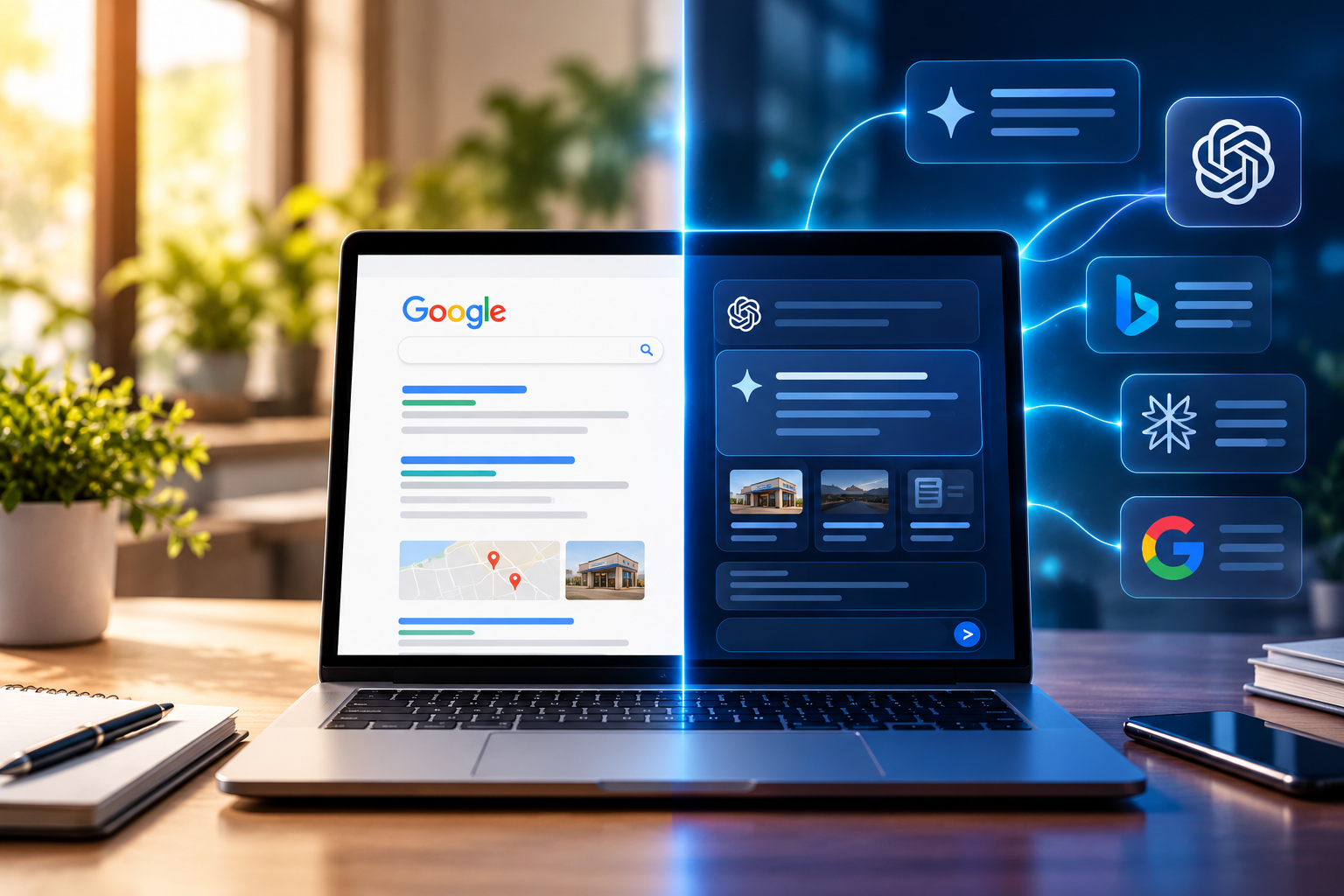
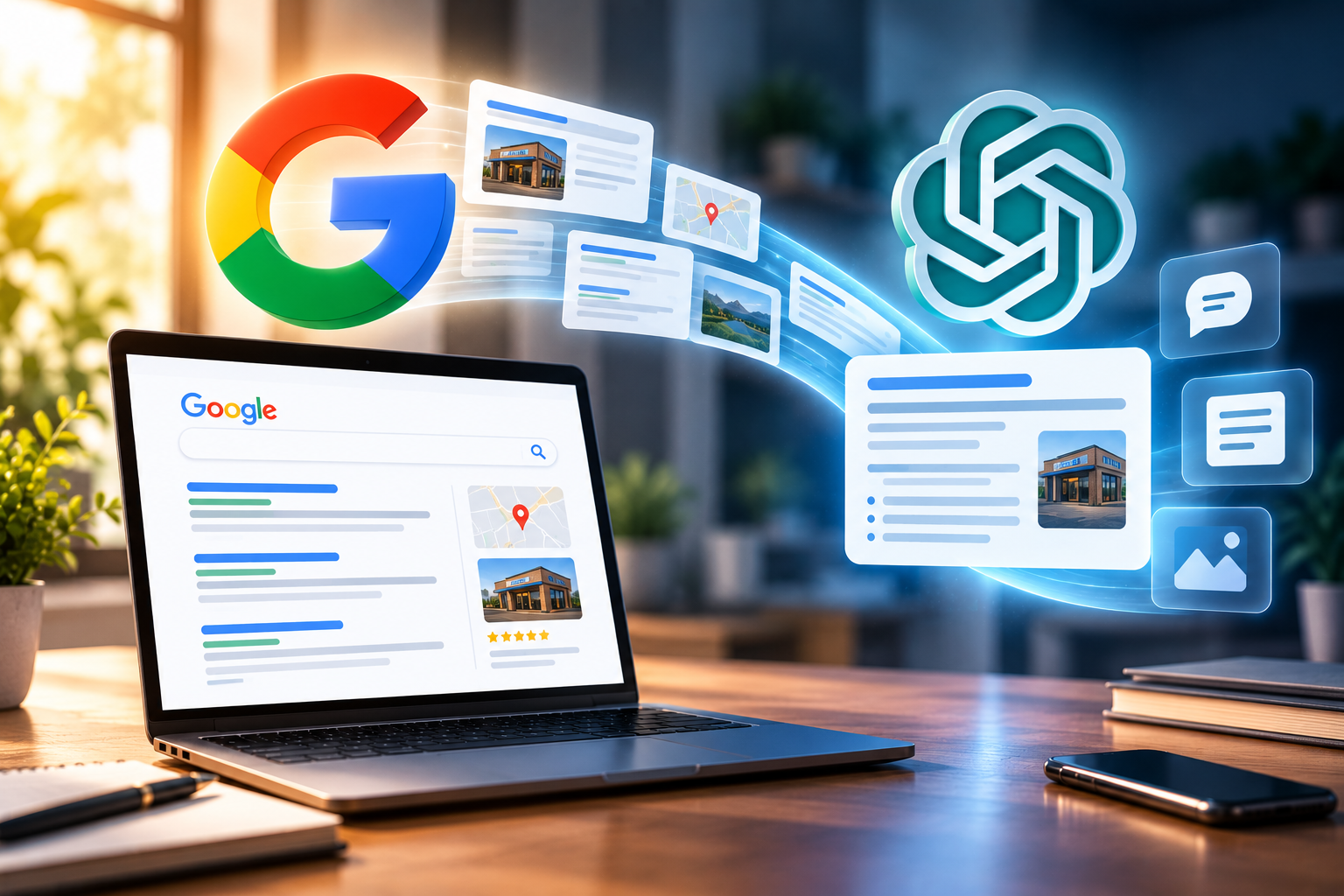
What has changed is that traditional search is no longer the only place where businesses can be discovered.


And that's an important difference.


We don't believe businesses should abandon SEO for AI optimization. We believe businesses need to build AI search optimization into an already strong SEO strategy.

AI Search Didn't Erase Google Search

There's a tendency in digital marketing to treat every new technology as the replacement for whatever came before it.


But consumer behavior doesn't usually change that neatly.


Someone might ask ChatGPT to research a problem, search Google for a local company, look at that company's Google reviews, visit its website, and then contact the business.

Those experiences can all be part of the same buying journey.


That's why we don't view Google Search, local SEO, and AI search as competing strategies.

They're different opportunities for a business to be found.


For small and local businesses especially, being visible when someone searches for a specific service in a specific area still matters tremendously.


A homeowner searching for a local contractor isn't suddenly irrelevant because ChatGPT exists.

Neither is someone searching Google for a nearby attorney, financial adviser, auto repair shop, fertility specialist, or environmental testing company.


Those searches are still happening.


The strategy simply needs to account for more ways of searching than it did before.

SEO Is Evolving, Not Starting Over

This distinction matters because businesses are being introduced to terms such as:

AEO.

GEO.

AI SEO.

LLM optimization.

AI visibility.


Some of these concepts describe legitimate changes in search.


But businesses shouldn't interpret them to mean everything they've previously invested in is obsolete.

Google's own guidance for its generative AI search experiences continues to emphasize foundational SEO practices.


That makes sense.


Before a search engine or AI system can confidently surface information about a business, it first needs to understand that business.

What services does it provide?

Where does it operate?

What subjects does it have expertise in?

Does its website provide useful information?

Can its pages be discovered and understood?

Does information about the company appear consistent across the web?

Does the website answer the questions people actually have?

Those have been SEO questions for years.


AI hasn't made them disappear.


If anything, making your business clear and understandable across the web has become even more important.

The SEO Foundation Still Matters

We believe businesses should be cautious when they're told to abandon "old SEO" for an entirely AI-focused strategy.


There are plenty of outdated SEO tactics that should have disappeared years ago.

Keyword stuffing isn't a strategy.


Publishing hundreds of nearly identical pages isn't a strategy.

Writing a 2,500-word article simply because someone said longer articles rank better isn't a strategy.


Creating four generic blog posts every month without knowing whether potential customers care about the subjects isn't a strategy either.


But those things aren't what we mean when we talk about traditional SEO.


A strong SEO foundation includes understanding what potential customers are searching for, building a website that search engines can properly crawl and understand, creating useful service and location content, strengthening local relevance, answering meaningful questions, developing authority, and making it easy for people to find the information they need.


Those fundamentals still matter.


Now we're building another layer on top of them.

Where AI Search Changes the Strategy

AI search does require us to think differently about certain aspects of optimization.

Search isn't always ten blue links anymore.


Someone can ask a detailed question and receive a synthesized answer before visiting a website.


Google can generate an AI Overview.

ChatGPT can help someone compare options.


AI Mode can allow a person to continue asking increasingly specific questions.


That means content needs to do more than simply target a keyword.

We need to think about the entire subject surrounding that search.

What questions come before it?

What questions come afterward?

What information would help someone make a decision?

What expertise can the business contribute that isn't already repeated on hundreds of other websites?

Can the content clearly explain something that an AI system may need to understand and summarize?


This is where SEO strategy is expanding.


We're not removing the foundation. We're adding to it.


What About AI-Generated Content?

This is another area where we think the conversation has become too black and white.

We use AI.


We also don't believe that simply using AI to help write content makes that content bad.


The bigger question is:

Who is creating the strategy behind the content?

There is a major difference between asking AI to:

"Write 50 SEO blogs for my company."


and having an experienced marketer determine what customers are searching for, identify an opportunity, develop the topic and angle, provide business-specific information, use AI to assist with drafting, and then have a human review, edit, fact-check, and optimize the finished piece.


In both cases, AI technically helped create content.


But those are completely different processes.


AI Can Write. That Doesn't Mean AI Understands Your Business.

This is where we believe human involvement becomes critical.


An AI platform doesn't automatically know which service your company wants to grow.

It doesn't inherently know which questions your customers ask when they call.


It doesn't know that one service generates substantially better leads than another unless someone provides that information.


It doesn't automatically understand your local market, your competitors, your previous SEO performance, your customers, your sales process, or the years of experience you've accumulated in your industry.


And AI can still provide incorrect information.

That's why our philosophy isn't human versus AI.


It's human strategy supported by AI.

We can use AI to work more efficiently.

We can use it to organize information.

We can use it during research.

We can use it to help draft content.

We can use it to identify additional questions worth exploring.


But someone who understands SEO and the business should still be asking:

Why are we creating this?


If there isn't a good answer to that question, producing the content faster doesn't make the strategy better.

More Content Isn't Automatically Better SEO

AI has made it incredibly easy to create content at scale.

That's both an opportunity and a problem.


A business can now generate dozens—or hundreds—of articles much faster than it could several years ago.


But publishing more pages doesn't automatically create more authority.


If those pages repeat information already available everywhere else, don't address meaningful customer needs, or exist primarily to target keywords, what value are they really adding?


We believe the better question is:

Does this piece of content deserve to exist?

Does it answer something customers genuinely ask?

Does it provide useful information?

Does it demonstrate the company's knowledge?

Does it help someone solve a problem or make a decision?

Does it contribute something meaningful to the website?


That's the strategy that should come before deciding whether a human or AI writes the first draft.


Small Businesses Don't Need to Chase Every New AI Trend

This may be one of the biggest risks we see right now.

AI is moving extremely quickly.


New optimization tactics, acronyms, platforms, and supposed ranking factors seem to appear constantly.


Business owners can easily feel like everything they were doing six months ago is suddenly obsolete.


It isn't.


Your customers still need to understand what you do.

Search engines still need to understand your website.

Your business still needs authority.

Your website still needs useful information.

Local businesses still need strong geographic relevance.


People still care about reviews, reputation, expertise, trust, and whether your company appears capable of solving their problem.


Those fundamentals don't disappear because the interface people use to find information changes.

Our Approach: SEO + AI Search Optimization

At Infinite Web Co., we aren't separating SEO and AI optimization into two completely unrelated worlds.


We're evolving the strategy.


That means continuing to work on the elements of SEO that are producing results while also thinking about how businesses appear within newer AI-driven search experiences.


The modern search strategy becomes something closer to:

SEO + Local SEO + Content Strategy + Authority + AI Search Optimization

Not:

SEO

AI


That's a very important distinction.


Businesses shouldn't abandon an established source of visibility because a new one is emerging.

They should work toward being visible in both.


Don't Let AI Hype Replace Marketing Strategy

AI is going to continue changing digital marketing.

We're excited about many of those changes.


But new technology doesn't eliminate the need to understand your customers, your market, your business, and the reasons people choose you.


If anything, AI makes strategy more important.

Anyone can generate content now.

Anyone can ask AI for keywords.

Anyone can generate a website.

Anyone can ask ChatGPT for an SEO plan.

The differentiator becomes knowing whether any of it is actually good.


That's where experience matters.


An experienced SEO professional should be able to look at what AI produces and say:

This is useful.

This is inaccurate.

This doesn't fit the business.

This keyword isn't worth pursuing.

This topic has potential.

This page needs something AI doesn't know.

This strategy needs to change.

AI can accelerate execution.


It shouldn't eliminate critical thinking.


The Future Isn't SEO vs. AI

We recently read a Search Engine Land analysis examining several of the biggest claims being made about AI search. We agreed with its larger takeaway: the data doesn't support many of the extreme conclusions being repeated about AI replacing search and traditional SEO becoming irrelevant.


Our own experience leads us to a similar conclusion.

Traditional SEO is still working.

AI search is growing.


Both things can be true at the same time.

So instead of asking:

"Should we stop doing SEO and start optimizing for AI?"


We think businesses should be asking:

"How do we take an SEO strategy that's already built around helping people find our business and expand it for the way search is changing?"

That's the conversation worth having.


Because SEO isn't disappearing.


The places where SEO can help your business get discovered are expanding.


Frequently Asked Questions

Is traditional SEO still effective?

Yes. Traditional organic search and local search can still provide businesses with visibility, website traffic, calls, leads, and customers. However, SEO strategies should continue evolving as search engines incorporate more AI-powered experiences.


Is AI SEO replacing traditional SEO?

We don't believe businesses should treat them as replacements for one another. AI search optimization is better viewed as an additional part of a broader search strategy that still includes technical SEO, content, local optimization, website structure, authority, and search intent.


Can I use AI to write content for my website?

AI can be a useful content-production tool. We recommend having knowledgeable humans determine the strategy, provide business-specific expertise, verify factual information, edit the content, and ensure the final page actually provides value.


Does Google penalize content simply because AI was used?

Google's published guidance focuses heavily on the quality and purpose of content rather than simply the method used to produce it. Large-scale automated content created primarily to manipulate search rankings can create problems, while AI can legitimately assist with content creation when the result is useful and valuable.

What is the difference between SEO and AI search optimization?

SEO traditionally focuses on improving visibility across search engines and their various search features. AI search optimization considers how information may also be discovered, interpreted, cited, or surfaced within AI-driven experiences. There is considerable overlap between the two.


Should local businesses optimize for AI search?

AI visibility is becoming worth considering, but local businesses shouldn't neglect established channels such as Google Search and Google Maps in the process. A strong strategy can account for traditional search, local search, and emerging AI discovery together.

By Infinite Web Co LLC • August 7, 2026
For years, SEO agencies have relied on keyword rankings as the primary way to show success. It made sense. If your business moved from page three to page one—or from #8 to #2—it was an easy metric to understand and report.  But the way people discover businesses has changed. After reading the recent Search Engine Land article, "Your Rankings Aren't Telling You What Your Customers See," we agree with its overall message: rankings are no longer the complete picture of SEO success. At Infinite Web Co., we've been telling clients the same thing for quite some time. SEO Is No Longer Just About Google Rankings Today's customers don't just search Google and click the first blue link. They might: Search Google. Read Google Reviews. Ask ChatGPT. Search Facebook Groups for recommendations. Watch videos on YouTube. Look on Instagram or TikTok. Use Google Maps. Ask friends or coworkers. Every one of those touchpoints influences whether someone chooses your business. The challenge? There isn't a software platform today that accurately measures your visibility across every place customers discover businesses. Traditional rank trackers only measure a small piece of the customer journey. So... How Do You Know If SEO Is Working? We understand. SEO isn't inexpensive, and business owners deserve to know their investment is paying off. Instead of asking: "Did I move from #4 to #2?" Ask questions like: Are we getting more phone calls? Are more people submitting contact forms? Are customers saying they found us on Google? Are people mentioning they found us through ChatGPT or AI? Are referrals from Facebook Groups increasing? Are more people asking specifically for our company? Is our Google Business Profile receiving more calls, direction requests, and website visits? Those are the metrics that actually grow a business. We've Seen Businesses Rank #5 and Outperform #1 This surprises many business owners. Ranking first does not automatically mean you'll get the most customers. We've seen businesses ranked second, third, fourth, even fifth, generate more leads than the business sitting in the number one position. Why? Because customers don't make decisions based solely on rankings anymore. They compare. They research. They evaluate. Before contacting a business, they often look at: Reviews Website quality Photos Pricing information Services offered Experience Certifications Response times Trustworthiness If your competitor provides a better overall experience, many customers will choose them—even if you ranked above them. Your Website Now Has One Job: Earn Trust Getting someone to your website is only half the battle. Your website has to convince them you're the right company. Google has repeatedly emphasized creating helpful, people-first content and rewarding pages that provide a strong user experience, while SEO experts increasingly recommend designing every important page like a landing page because visitors often enter through service pages rather than the homepage. The businesses winning today typically include: Clear explanations Don't make visitors guess what you do. Explain your services in plain English. Real reviews Customers trust other customers. Show authentic reviews throughout your website—not just on a testimonials page. Before & After photos or Portfolio Show your work. People want proof. Frequently Asked Questions Answer the exact questions people ask before they call. This also helps with AI search and local SEO. Team Information Show who's behind the business. Real faces build confidence. Case Studies & Results Instead of saying you're the best... Show the results you've achieved. Trust Signals Include things like: Years in business Certifications Awards Associations Guarantees Warranties Licenses Insurance Easy Ways to Contact You If people have to hunt for your phone number or contact form... You've already lost potential customers. SEO Today Is About Visibility, Trust & Conversions The goal isn't simply to rank. The goal is to be the business people choose. That means being visible across multiple platforms, creating content that genuinely answers customer questions, building trust through reviews and proof, and having a website that makes visitors feel confident enough to contact you. That's what modern SEO looks like. The Bottom Line Rankings still matter. They're just no longer the finish line. A first-place ranking without calls doesn't grow a business. A third-place ranking that consistently generates leads, appointments, and revenue is far more valuable. As search evolves with AI, Google, Maps, social platforms, and conversational search, businesses need to stop obsessing over rankings alone and start focusing on what really matters: Being found. Being trusted. Being chosen. At Infinite Web Co., that's the strategy we build for every client. Because at the end of the day, rankings don't pay the bills—new customers do.

Professional financial advisor workspace with a computer showing a clean website design.
March 25, 2026
Learn the most common financial advisor website mistakes that prevent growth. Discover why generic templates fail independent advisors and how to build a high-converting site.